Ask what must happen at reopening, not just when it must happen. Manufacturer documents distinguish application milestones and service conditions. Preserve those distinctions in the handoff so the contractor can assess the job.
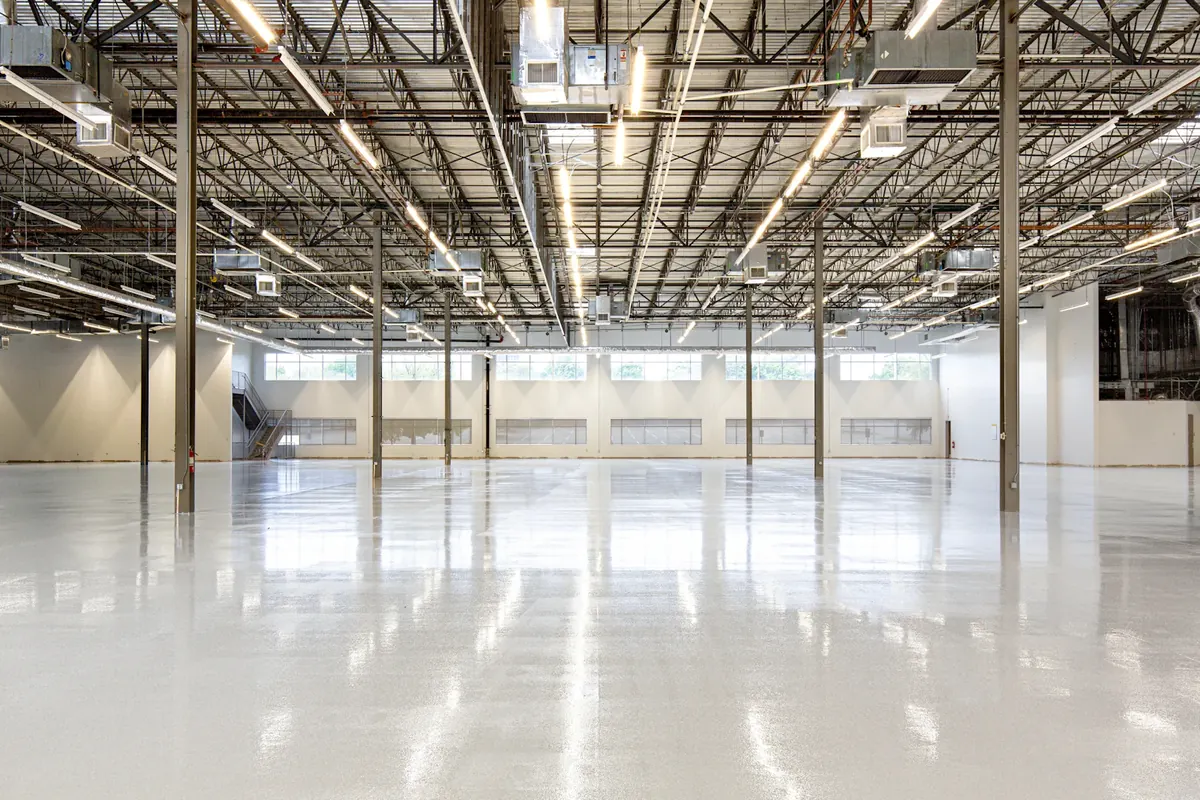
Ask what must happen when the doors reopen.
A facilities buyer says, “You can have the floor for the weekend. We need it back Monday.” That sounds like a schedule. It is actually several unanswered questions: when the area becomes clear, when the final coat can be completed, and what people or equipment must do on Monday.
Our perspective: a useful coating opportunity handoff contains an operating requirement, not just a target date. “Monday at 6 a.m., loaded forklifts through the dispatch aisle” gives the contractor a problem to assess. “Quick cure required” does not.
The buyer defines the operational need. The contractor and appropriate technical advisers assess the system, substrate, preparation, conditions and achievable sequence. Sourci helps establish buyer context; it does not select coating systems or approve reopening.
Two product documents use different milestones.
We reviewed two manufacturer documents on October 24, 2026 to see what a prospecting handoff must preserve. This is a small, deliberately selected documentation comparison, not a product test or a ranking. The temperatures and endpoint labels differ, so the rows are not interchangeable specifications.
| Document and condition | Published milestones | Qualification implication |
|---|---|---|
| Sika Sikafloor-264, US PDS, September 2026 v08.05, p. 3 68°F / 20°C ambient and substrate | Recoat: 8–24 hours. Foot traffic: approximately 12 hours. Light traffic: approximately 2 days. Full cure: approximately 7 days. | A recoat interval or foot-traffic time alone does not establish readiness for the buyer’s intended operation. |
| Same Sika document 50°F / 10°C ambient and substrate | Foot traffic: approximately 24 hours. Light traffic: approximately 3 days. Full cure: approximately 10 days. | Keep the stated temperature with the time. Do not carry a warmer-condition figure into an unverified colder site. |
| Tnemec Series 280 Tneme-Glaze, PDS dated April 24, 2026, p. 1 75°F / 24°C | “To Topcoat”: 8–72 hours. “To Place in Service”: 24 hours. | The cited timing table does not split foot traffic, forklifts and full cure into separate rows. Ask what service condition applies to the proposed system and use. |
Read the complete current manufacturer documentation and obtain project-specific technical confirmation before using any timing in a proposal. These excerpts are evidence of different labels and conditions; they are not installation instructions or a promise that either product fits a particular shutdown.
Download the dated source comparison (CSV). It retains document versions, page references, conditions and the limits of this comparison.
A 60-hour shutdown can leave only 24 hours after the final coat.
Consider an invented planning exercise. An area is available Friday at 6 p.m. and must reopen Monday at 6 a.m.: 60 elapsed hours. Suppose the contractor’s still-unapproved plan finishes the final coat Sunday at 6 a.m. The time remaining before reopening is 24 hours, not 60.
| Boundary | Assumed time | Elapsed interval |
|---|---|---|
| Area handed over | Friday, 6 p.m. | Shutdown begins |
| Final coat completed | Sunday, 6 a.m. | 36 hours after handover |
| Requested reopening | Monday, 6 a.m. | 24 hours after final coat; 60 hours after handover |
The 36-hour work interval is an invented input, not a productivity rate. Preparation, repairs, intermediate coats, testing and access may require a different sequence. The example only demonstrates why the entire shutdown cannot be counted as time after the final coat.
If the buyer needs forklift movements on Monday, neither “24 hours available” nor “foot traffic allowed” closes the question. Record the intended use and route it for technical assessment. Do not silently replace the buyer’s actual need with a less demanding milestone.
Build a brief the estimator can act on.
Use the free shutdown brief worksheet. Record exact dates, local times and time zone rather than “this weekend.” Keep buyer statements separate from contractor assumptions and technical approvals.
- Area and access: which zones are available, who clears them, and whether adjacent operations continue.
- First required use: people walking, loaded equipment, vehicle turns, cleaning, chemical exposure or another specific operation.
- Deadline: first required use for each zone, plus which parts of the window can move.
- Site facts still to verify: existing floor condition, moisture assessment, contamination, environment and restrictions on preparation.
- Sequence owner: who will confirm the system, work duration, final-coat completion and return-to-service conditions.
- Evidence: who supplied each fact, when, the document revision used, and the unresolved question.
A responsible buyer and a credible need can justify a technical site visit even when the method is unresolved. The handoff should explain why that visit is useful. It should not claim the work is feasible simply because the buyer answered the phone.
Use three decisions instead of an automatic “qualified” label.
| Evidence available | Next step |
|---|---|
| Buyer identifies the area, intended use, required date and site-access contact; technical questions remain. | Route for contractor review and agree the purpose of a site visit. Keep feasibility unconfirmed. |
| Buyer requests a weekend turnaround but cannot define reopening use or the actual access window. | Hold a schedule commitment. Clarify operations and access first. |
| Contractor confirms the required operating window exceeds its delivery capability. | Discuss a revised window or decline the scope. Do not promise an unverified faster system. |
For the wider commercial checks, use the floor-coating qualification guide. For account selection and reaching facilities buyers, see finding commercial epoxy flooring work.
What this review establishes.
Sourci selected two publicly available manufacturer documents that expose different timing labels. We recorded the document identity, revision, page, temperature and named milestones; no products were applied or tested. The table supports a narrow conclusion: a time without its endpoint and conditions is an incomplete qualification note.
Product choice, compatibility, surface preparation, site conditions and reopening approval remain with the contractor and appropriate technical advisers. This article does not establish product equivalence, endorsement, an affiliation with either manufacturer, or a result achieved for a Sourci customer.
Primary sources
- Sika US: Sikafloor-264 PDS, September 2026, version 08.05, page 3
- Tnemec: Series 280 Tneme-Glaze PDS, April 24, 2026, page 1
Both checked October 24, 2026. Confirm the current documents when preparing an actual job.
Need better facilities conversations?
Sourci researches relevant accounts, manages agreed outreach and qualifies interested replies. Your team handles technical assessment, estimates and delivery.
Explore managed prospecting for flooring and coatings →